
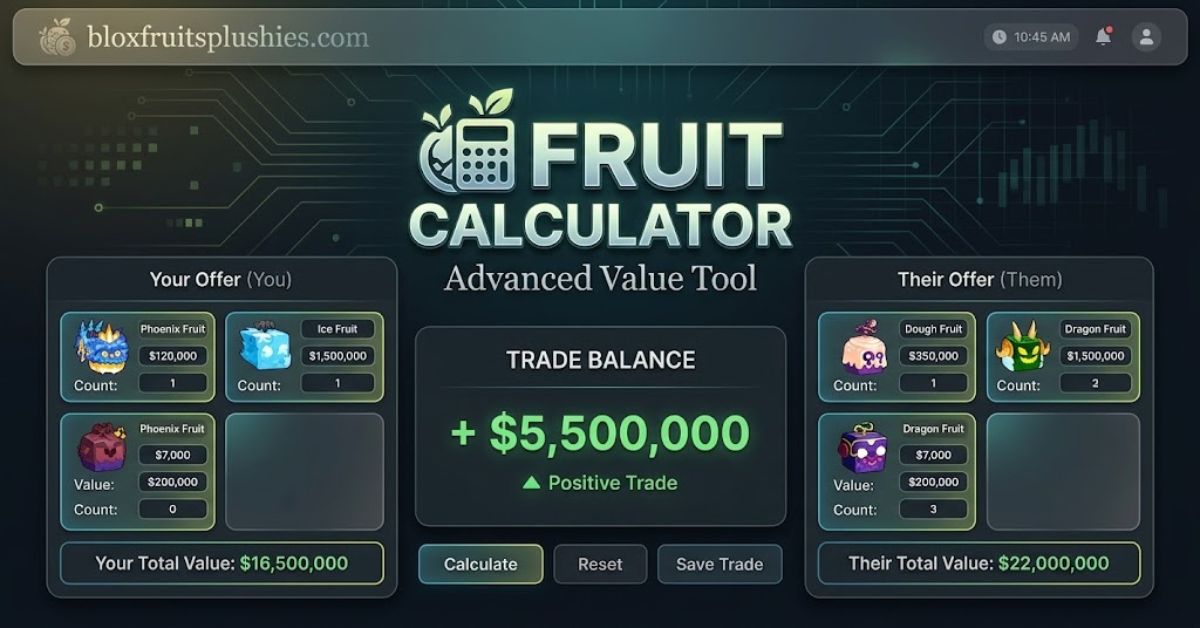
Fruit Calculator: The One Habit That Actually Stops You From Losing Trades
I once spent nearly two weeks grinding for a fruit I really wanted, only to trade it away four days later for something that, looking back, wasn’t even close to equal value. I didn’t realize how badly I’d misjudged the trade until a clanmate casually mentioned running it through a fruit calculator, out of curiosity more than suspicion. The numbers didn’t match what I’d assumed at all. That one conversation changed how I’ve approached every trade since.
Quick Answer
A fruit calculator is a tool built for Blox Fruits players that compares the items on both sides of a trade and tells you whether the deal favors you, is fair, or favors the other person, based on current trading values rather than guesswork or personal assumptions.
The Problem: Trading on Confidence Instead of Numbers
Most bad trades don’t happen because someone was being reckless. They happen because a player felt confident about a fruit’s value without actually checking it. A few patterns show up again and again:
- Assuming a fruit is still worth what it was a few weeks ago
- Trusting how a trade “feels” instead of comparing actual current values
- Getting talked into a deal by someone who clearly did check a fruit calculator before messaging you
- Not accounting for smaller items thrown into a trade that quietly shift the balance
A fruit calculator exists specifically to remove that gap between what a trade feels like and what it’s actually worth.
My Experience Learning to Rely on a Fruit Calculator
After that bad trade, I stopped trusting my own memory of values entirely. I picked a fruit calculator that pulled from live trading activity rather than a manually updated list, and I made it a rule to run every trade through it before agreeing to anything, no matter how small.
The habit felt slow and unnecessary at first, like I was double checking something I already understood. But within the first month, it flagged two trades that looked fine on the surface and turned out to be noticeably unfair once the actual numbers were in front of me. That’s when I stopped seeing a fruit calculator as a beginner’s tool and started seeing it as something every serious trader should be using, regardless of experience level.
How to Actually Use a Fruit Calculator Well (Solution + Tips)
1. Enter Every Item, Not Just the One You’re Focused On
It’s tempting to only plug the “main” fruit into a fruit calculator and assume smaller items in the trade don’t matter much. In reality, extra fruits, gamepasses, or bundled items can shift a result significantly.
Tip: Add every single component on both sides of the trade into the fruit calculator, even ones that seem minor. Small additions are exactly where hidden imbalance tends to hide.
2. Recheck Right After Game Updates
Values shift quickly after balance patches, sometimes within hours, as the trading community reacts to changes. A fruit calculator pulling from live data usually adjusts faster than static, manually maintained lists.
Tip: Be extra cautious with big trades in the first day or two after a major update. Even a good fruit calculator can lag slightly behind a sudden shift in demand.
3. Use It Before You Agree, Not After
The biggest mistake I made originally was checking the numbers after I’d already told someone “yeah, deal.” Run the trade through a fruit calculator before committing verbally, so you’re never in the position of backing out of something you already agreed to.
Tip: If someone rushes you to decide immediately without giving you time to check, treat that pressure itself as a red flag, separate from whatever the actual trade turns out to be.
4. Compare Results Across More Than One Tool When It Matters
No fruit calculator is perfect all the time, and different tools sometimes disagree slightly, especially right after an update when values are still settling.
Tip: For low value, everyday trades, one reliable fruit calculator is enough. For a genuinely rare or high value trade, it’s worth the extra minute to cross check a second source before committing.
5. Understand What a Fruit Calculator Can’t Tell You
A fruit calculator measures current trading value, not personal usefulness. It can’t know that you specifically want a fruit for your fighting style or that you’ve been chasing it for weeks.
Tip: It’s fine to accept a trade a fruit calculator marks as slightly unfavorable if the fruit genuinely matters to your gameplay. Just make that choice on purpose, not by accident.
Real Example: A Trade That Looked Fine Until It Wasn’t
A friend in my trading group was offered a deal that seemed reasonable at a glance, one rarer fruit for two of his mid tier items. He almost accepted immediately, since the offer sounded generous on its face.
Running it through a fruit calculator told a different story. Once every item was factored in, the trade was actually much closer to even than it first appeared, not the clear win he’d assumed. He countered with a slightly adjusted offer based on what the calculator showed, and the other trader accepted it almost right away, which strongly suggested the original offer had counted on him not checking.
That single check turned what could have been a quiet loss into a fair outcome, simply because he used a fruit calculator before saying yes.
FAQs
Q1. Is a fruit calculator only useful for beginners?
No, experienced traders benefit just as much, since values shift constantly with updates and it’s easy for even a knowledgeable player to miss a recent change.
Q2. How accurate is a typical fruit calculator?
Accuracy depends on how the tool sources its data. Calculators pulling from live trading activity, supply, and demand tend to stay more reliable than ones based on infrequently updated community lists.
Q3. Should I trust a screenshot someone sends claiming to be from a fruit calculator?
No, always run the numbers yourself. Screenshots can be outdated or edited, and checking independently only takes a minute.
Q4. Why do different fruit calculator tools sometimes disagree?
Different tools often update their data at different speeds, especially right after a patch. If two results disagree significantly, waiting a day or checking a third source usually clears it up.
Q5. Is it always a bad idea to accept a trade a fruit calculator marks as unfair to me?
Not necessarily. If the fruit has real value to you personally, a small loss on paper can still be a reasonable trade, as long as you’re making that decision knowingly.
Conclusion
A fruit calculator won’t make every trading decision for you, but it consistently removes the kind of guesswork that leads to trades players only regret after the fact. The habit of checking before committing is simple, but it’s the difference between trading with actual information and trading on assumptions that quietly go stale.