
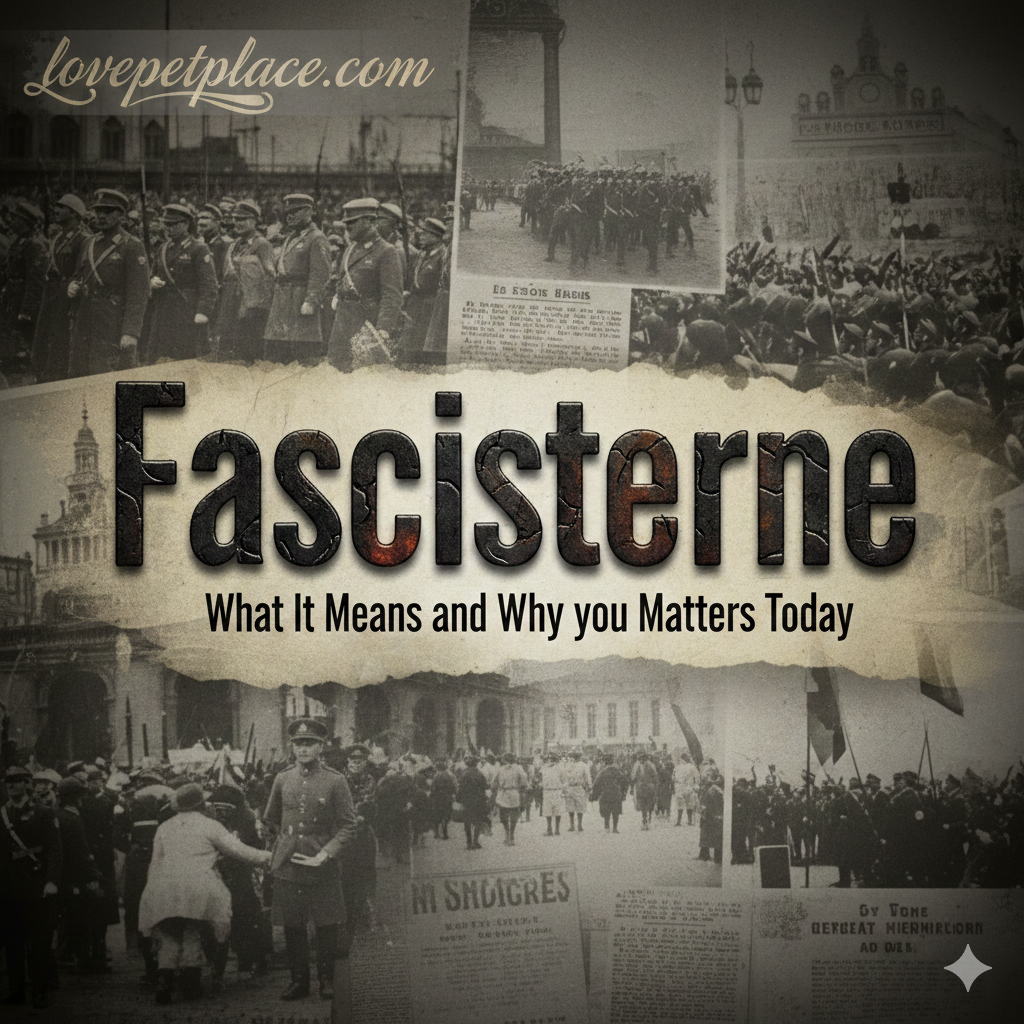
Fascisterne Explained: The Shocking Truth You Must Know
Introduction to Fascisterne and its origins
Fascisterne: a term that stirs up strong emotions and conjures images of oppressive regimes. But what exactly does it mean? Its roots trace back to early 20th-century Europe, where political turmoil gave rise to movements that sought power through authoritarian means. Today, as we witness a resurgence of far-right ideologies, understanding fascism is more crucial than ever. The echoes of the past resonate in current events, reminding us that history often repeats itself. It’s time to delve deeper into the complexities of fascism its origins, characteristics, and its alarming relevance in today’s society.
Let’s explore why this topic matters now more than ever and how we can work together to combat such ideologies before they gain further ground.
The rise of Fascisterne in Europe
The rise of Fascisterne in Europe during the early 20th century was marked by a profound social and political upheaval. Economic instability, especially following World War I, created fertile ground for radical ideologies.
Discontent with traditional governance led many to seek strong leaders promising order and national rejuvenation. Countries like Italy and Germany became hotspots for these movements. Figures such as Benito Mussolini and Adolf Hitler capitalized on public fears and aspirations.
Fascist parties emphasized nationalism, often intertwining it with militarism. They rejected democracy in favor of authoritarian rule. Propaganda played a crucial role in shaping public perception, painting opponents as enemies of the state.
As tensions escalated across borders, Fascism’s appeal grew among those disillusioned by existing political systems. The allure of unity through strength drew many into its fold, setting the stage for dramatic shifts in Europe’s socio-political landscape.
You May Like: Bardoek: Powerful Journey from Roots to Modern Tables
Key characteristics of Fascisterne
Fascisterne is marked by several defining characteristics. One of the most prominent features is authoritarianism. Fascist regimes often centralize power in a single leader or party, suppressing dissent and opposition.
Nationalism plays a crucial role as well. It promotes an intense pride in one’s nation, sometimes at the expense of minorities or other nations. This sense of superiority can lead to exclusionary policies.
Another key trait is militarism. Fascists glorify the military and advocate for aggressive expansion, believing that strength defines national greatness.
Propaganda also thrives under fascist governments. Information is manipulated to instill loyalty and control public perception, shaping narratives to fit state agendas.
Anti-communism serves as a unifying force within fascist ideology, positioning itself against socialist movements while appealing to those who fear economic instability or class struggle.
The impact of Fascisterne on society
Fascisterne profoundly disrupts social structures. It erodes trust between communities, fostering division and fear. Citizens often find themselves pressured to conform to a singular ideology.
This oppressive environment stifles creativity and critical thinking. Art, literature, and free expression suffer under stringent censorship. The vibrancy of diverse cultures is diminished as dissenting voices are silenced.
Economically, fascist regimes may promote state control over private enterprise. This can lead to inefficiencies that ultimately harm the populace while enriching a select few in power.
Social cohesion deteriorates when propaganda fuels hatred against perceived enemies—be they ethnic groups or political dissidents. Such polarization can incite violence and unrest within society.
As history shows, the scars left by fascism linger long after its fall. Communities struggle with trauma, affecting generations who must grapple with their shared pasts amidst ongoing conflicts and tensions.
Examples of Fascist regimes throughout history
Fascisterne has manifested in various regimes throughout history, each leaving its mark on society. One of the most notorious examples is Mussolini’s Italy, where nationalism and militarism were promoted aggressively from 1922 until World War II.
Nazi Germany under Adolf Hitler epitomized fascist ideology, with its focus on racial purity and expansionism leading to catastrophic consequences. The regime orchestrated the Holocaust, a horrific genocide that claimed millions of lives.
In Spain, Francisco Franco’s rule after the Spanish Civil War showcased another variant of fascist governance. His authoritarian regime suppressed dissent while promoting conservative values for several decades.
Brazil also experienced a brief period of fascism under Getúlio Vargas during the 1930s and 1940s. Though it was less pronounced than in Europe, Vargas implemented nationalist policies that resonated with some aspects of fascism.
These historical examples illustrate how fascistic ideologies can take root in different contexts across nations.
How Fascisterne is relevant in today’s world
Fascism’s relevance today is starkly visible in various global movements. Many nations experience a resurgence of authoritarian ideologies, often cloaked in populist rhetoric.
Social media amplifies these voices, spreading misinformation and creating echo chambers where extremist beliefs can thrive. This digital landscape allows for the rapid dissemination of fascistic ideas that resonate with those feeling disenfranchised.
Economic instability also plays a significant role. As people struggle with unemployment and inequality, they become susceptible to leaders who promise simple solutions through nationalistic policies.
Moreover, the rise of hate crimes echoes historical patterns seen during earlier fascist regimes. Minorities face increased hostility as division becomes an attractive narrative for some political figures looking to consolidate power.
Understanding this connection between past and present is crucial. It serves as a vital warning against complacency in democratic societies worldwide.
The dangers and consequences of Fascisterne
Fascisterne poses significant dangers to societal structures and individual freedoms. It thrives on the suppression of dissent, stifling voices that challenge its narrative.
This ideology often scapegoats marginalized groups, creating an atmosphere of fear and division. Such tactics lead to a culture where hatred can flourish unchecked.
Economically, fascist regimes prioritize military spending over social services. This misallocation of resources exacerbates inequality and suffering among the populace.
Moreover, the erosion of democratic values is another grave consequence. When power concentrates in the hands of a few, it undermines institutions designed to protect rights and liberties.
History has shown us that fascism does not merely fade away; it can resurface if left unchallenged. Awareness and vigilance are essential in combating this persistent threat to society’s fabric.
Combating Fascisterne: What can be done?
Combating Fascisterne requires collective awareness and action. Education is key; understanding the historical context of fascism can empower individuals to recognize its signs today.
Community engagement plays a crucial role. Local groups can create safe spaces for dialogue, fostering inclusivity and solidarity among diverse populations.
Media literacy also matters. Encouraging critical thinking helps people discern misinformation that fuels extremist ideologies. Support independent journalism that prioritizes truth over sensationalism.
Advocacy is essential in shaping policies against hate speech and discrimination. Writing to representatives or participating in peaceful protests amplifies voices against oppression.
Supporting organizations dedicated to human rights can strengthen grassroots efforts worldwide. This multifaceted approach nurtures resilience against divisive forces seeking power through fear and hatred.
Conclusion
Fascisterne, or fascisterne as it is known in some contexts, remains a potent subject of discussion today. Its roots lie deep within Europe’s turbulent history and the rise of authoritarian regimes that sought to dominate societies through oppression and control. Understanding its origins helps us recognize its dangerous allure.
The various characteristics that define fascism—such as extreme nationalism, disdain for human rights, and an obsession with militarism—serve as warning signs for modern societies. The impact of these ideologies has been profound, influencing countless lives and shaping political landscapes across continents.
Throughout history, numerous examples illustrate how fascist regimes have risen to power. From Mussolini’s Italy to Hitler’s Germany, each case provides insight into how fear can manipulate public sentiment and lead nations down dark paths.
Today’s world still sees echoes of these themes. As nationalism resurges in many countries amidst global crises like immigration and economic instability, we must remain vigilant against the resurgence of such ideologies.
The dangers posed by fascist thinking are real; they foster division among communities and undermine democratic principles. It is crucial for individuals to stand against hate speech and intolerance while promoting inclusivity in their own circles.
Combating this ideological threat requires collective action: education about historical truths, support for democratic values, active participation in civic life all play vital roles in preventing history from repeating itself.
As society navigates complex challenges ahead, fostering awareness around the concept of fascisterne will be essential to ensure freedom prevails over oppression.
READ MORE: BLOX FRUITS PLUSHIES