Trade Calculator Blox Fruits: How I Learned to Stop Guessing and Start Checking
I used to think a trade calculator blox fruits players talk about was overkill for someone like me, someone who’d been trading for over a year and thought I already knew fruit values well enough. Then a single trade wiped that confidence out completely. I traded away a fruit I assumed was worth less than what I received, only to find out days later, after finally opening a calculator out of boredom, that I’d actually given up more value than I got. That trade changed how seriously I take these tools, and this guide covers everything I’ve learned since.
Quick Answer
A trade calculator blox fruits tool lets players compare the value of items on both sides of a proposed trade to see whether the deal is fair, favors them, or favors the other person. These calculators typically pull from current market data, including recent trading activity, supply, and demand, rather than relying on a fixed, manually written price list, which matters in a game where fruit values shift constantly due to balance updates.
The Problem: Trading on Instinct Doesn’t Hold Up Over Time
When you trade often enough, it’s easy to start believing you’ve internalized current values well enough to skip checking a trade calculator blox fruits offers. That confidence tends to fall apart for a few specific reasons:
- Fruit values shift after nearly every balance patch, sometimes significantly
- Memory of a fruit’s “usual” value doesn’t update automatically when the game changes
- Scammers and experienced traders often know current values better than casual players do
- A trade that looks obviously fair on the surface can hide a meaningful gap once every item is accounted for
Confidence built on outdated knowledge is more dangerous than admitting you don’t know a value, because it stops you from checking in the first place.
My Experience Rebuilding Trust in the Numbers
After that bad trade, I stopped relying on memory entirely and made it a rule to run every trade through a proper trade calculator blox fruits community members actually trust, no matter how confident I felt going in. The first few weeks felt unnecessary, like I was double checking things I already knew. Then the calculator caught two more trades that would have gone badly, both times because a recent patch had shifted a fruit’s value in a direction I hadn’t noticed.
That experience reframed the tool for me completely. A trade calculator blox fruits players use regularly isn’t a crutch for beginners, it’s a way of staying accurate in a game that updates faster than any single player can track by memory alone.
How to Actually Use a Trade Calculator Blox Fruits Players Trust (Solution and Tips)
1. Know What the Calculator Is Measuring
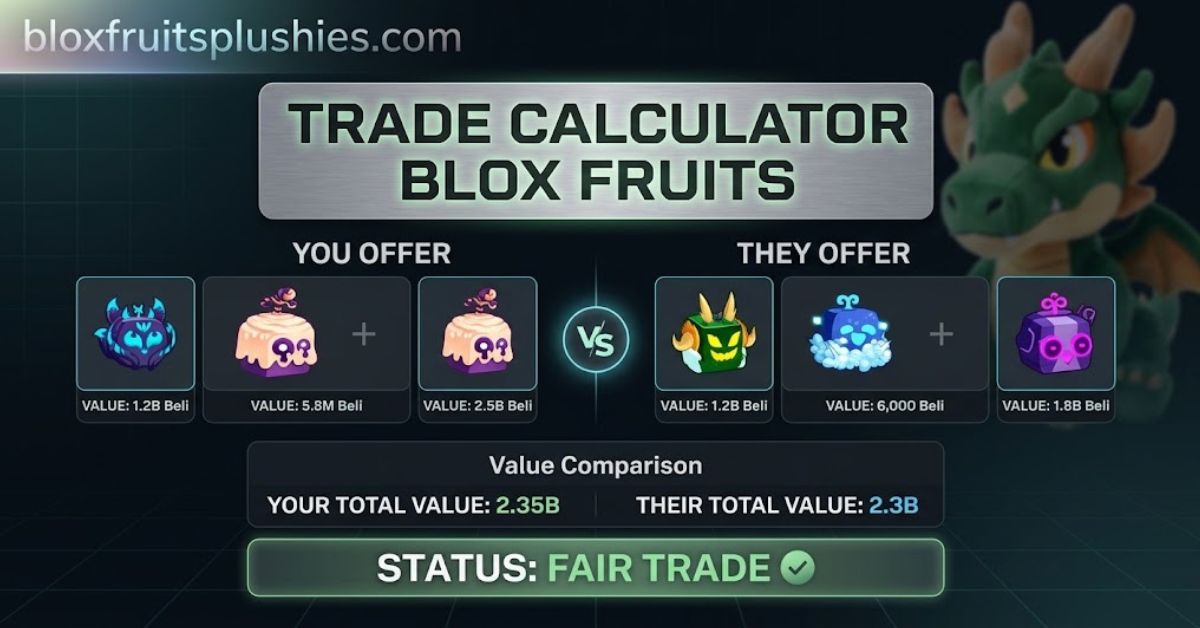
Most versions of a trade calculator blox fruits offers work the same basic way, you input what you’re giving and what you’re receiving, and it returns a verdict on whether the trade favors you, is even, or favors the other side. It’s reflecting current known values, not predicting future changes.
Tip: Treat the result as a snapshot of right now, not a permanent judgment. If a fruit is rumored to be getting reworked soon, factor that possibility in yourself alongside whatever the calculator tells you.
2. Enter Every Single Item, Not Just the Main One
A common mistake is checking only the fruit being traded and ignoring smaller add ons like gamepasses or extra items thrown in to sweeten a deal. Put everything from both sides into the calculator, since small additions can shift a trade from fair to lopsided quickly.
Tip: When someone adds a small item late in a trade conversation, plug it in right away instead of assuming it’s minor. Those late additions are sometimes exactly where an unfair trade hides.
3. Recheck Right After Major Updates
Values can shift within hours of a balance patch as the trading community reacts to buffs and nerfs. A trade calculator blox fruits relies on that pulls from live trading data will typically reflect this faster than a static, manually maintained list.
Tip: Avoid making high value trades in the first day or two after a big update if you can help it, since prices are often unstable during that window even with a good calculator.
4. Cross Check Big Trades Against a Second Source
No single tool is infallible, and even a reliable trade calculator blox fruits players rely on can occasionally lag behind a sudden shift. For trades involving rare or high value fruits, check the numbers against a second calculator or a recent community value discussion.
Tip: Save this extra step for trades that genuinely matter. For small, low stakes trades, one trustworthy calculator is generally enough.
5. Use It Before You Agree, Not After
This is the mistake that got me in the first place. Run the numbers through a trade calculator blox fruits before saying yes in chat, not after you’ve already agreed and feel awkward backing out.
Tip: If someone pushes you to decide instantly without giving you time to check, treat that pressure itself as a warning sign. A trader with nothing to hide won’t mind a short pause.
Real Example: A Trade That Would Have Gone Differently
A friend in my trading group was offered what looked like a clear upgrade, a rarer fruit in exchange for two of his mid tier items. On the surface, it seemed like an easy yes. Running it through a trade calculator blox fruits players in our group use told a different story, the deal came back close to even once current values were properly accounted for, not the lopsided win it appeared to be at a glance.
Instead of accepting immediately, he countered with a slightly adjusted offer based on what the calculator showed. The other trader agreed almost right away, which strongly suggested the original offer had counted on him skipping the check entirely. That’s the exact outcome a trade calculator blox fruits offers is designed to prevent.
Frequently Asked Questions
Q1. Is a trade calculator blox fruits offers actually reliable?
Reliability depends on the specific tool. Calculators pulling from live trading activity, supply, and demand tend to stay more accurate than ones based on infrequently updated, manually written value lists.
Q2. Do I need to use a trade calculator blox fruits for every single trade?
Not necessarily for very small, low value trades, but it’s strongly recommended for anything involving rare fruits or multiple items, since that’s where miscalculations cost the most.
Q3. Can a trade calculator blox fruits predict future value changes?
No, it reflects currently known values, not upcoming balance changes or reworks. If a rework is rumored, weigh that yourself in addition to the calculator’s result.
Q4. Why do two different trade calculator blox fruits tools give different answers?
Different tools may pull from different data sources or update on different schedules, which can cause temporary disagreement, especially right after a game update. Checking a second source helps resolve that.
Q5. Should I decline a trade if the calculator says I lose slightly?
Not automatically. If you genuinely want a specific fruit for gameplay reasons, a small loss on paper can still be worth it, as long as it’s a deliberate choice rather than an accident.
Conclusion
Trading well in Blox Fruits comes down to combining experience with actual verification, not replacing one with the other. A trade calculator blox fruits players rely on won’t make every decision for you, but it removes the kind of guesswork that leads to trades you only regret after the fact.