Steal a Brainrot Trading Values: What Actually Determines a Fair Trade
I got scammed in Steal a Brainrot the exact same way most new traders do. I saw a flashy sounding item offered for two of my brainrots and jumped on it, only to check community values afterward and realize I’d given up way more than I got back. That mistake is what pushed me to actually learn how Steal a Brainrot trading values work instead of trading on vibes, and this guide covers everything I’ve picked up since.
Quick Answer
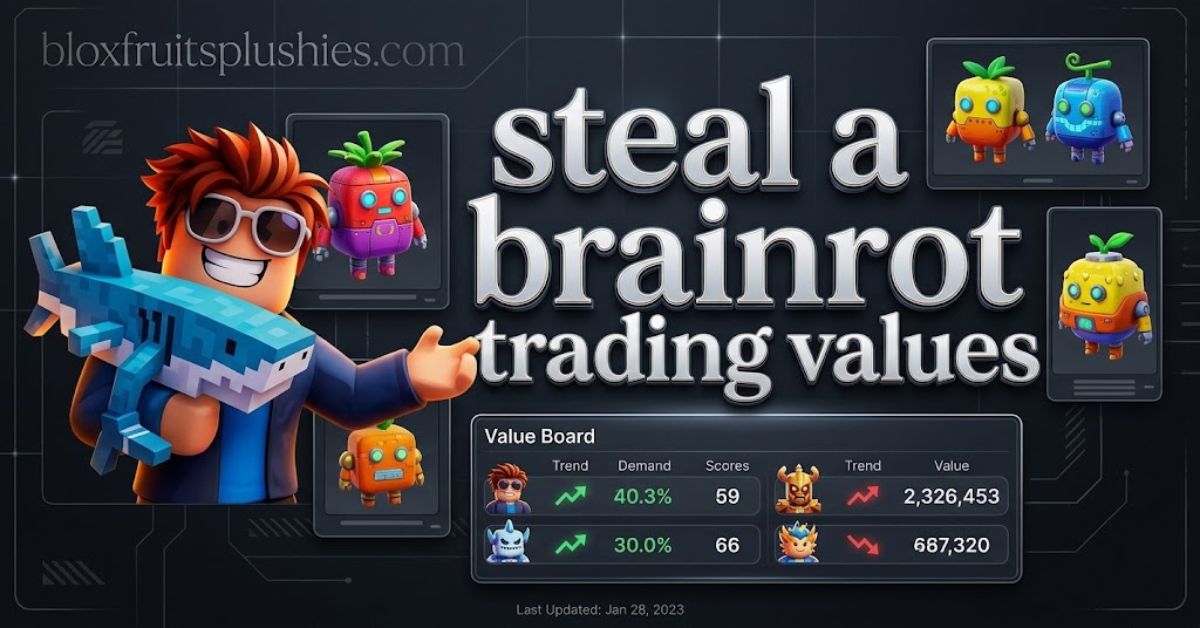
Steal a Brainrot trading values refer to the community estimated worth assigned to each brainrot in the game, based mainly on rarity, how often it spawns, income per second, and current player demand. Unlike a game with fixed prices, these values shift constantly and are tracked through community tools, value lists, and calculators rather than anything built directly into the game itself.
The Problem: Trading Without Understanding Values Is a Fast Way to Get Taken Advantage Of
Steal a Brainrot’s trade system looks simple on the surface, but a lack of understanding around trading values creates real problems for new and casual players:
- Assuming a flashy looking brainrot is automatically worth more than a plain looking one
- Not accounting for mutations and traits, which can multiply a brainrot’s real value several times over
- Trusting screenshots of “value checks” without verifying them independently
- Not realizing that supply and demand shift trading values within days of a new update
Without understanding how Steal a Brainrot trading values are actually calculated, you’re essentially negotiating blind while the other trader already knows the real numbers.
My Experience Learning How Trading Values Actually Work
After that first bad trade, I started cross referencing every offer against community value lists before agreeing to anything. What surprised me most was how much mutations changed the picture. A brainrot I considered mid tier turned out to be worth several times its base value once I accounted for a rare mutation attached to it, something I’d completely ignored the first time around.
Over time, checking Steal a Brainrot trading values before every trade became second nature, and it directly prevented at least two more bad trades where the numbers looked fair on the surface but weren’t once mutations and current demand were factored in properly.
How Steal a Brainrot Trading Values Actually Work (Solution + Tips)
1. Rarity Is the Biggest Factor, But Not the Only One
Base rarity plays the single biggest role in determining Steal a Brainrot trading values, with rarer tiers commanding significantly higher worth than common ones. However, rarity alone doesn’t tell the full story.
Tip: Don’t assume a higher rarity tier automatically beats a lower tier item once mutations are factored in. A common brainrot with a rare mutation can sometimes outvalue a plain higher tier one.
2. Mutations and Traits Multiply Value Significantly
Mutations like Rainbow, Galaxy, Neon, and Crystal apply multipliers on top of a brainrot’s base value, and some mutations carry dramatically higher multipliers than others. Traits stack additional bonuses on top of that.
Tip: Always ask specifically whether an offered brainrot has a mutation or trait attached before evaluating the trade. A base value comparison alone can massively understate what’s actually being offered.
3. Supply, Spawn Rate, and Exist Count Matter More Than People Expect
A brainrot’s Steal a Brainrot trading value is also shaped by how often it spawns and how many copies currently exist. Lower spawn chances and lower exist counts tend to push values upward, since scarcity directly drives demand.
Tip: If a new update changes how often a brainrot spawns, expect its trading value to shift within days. Recheck values shortly after any major patch rather than relying on numbers from before the update.
4. Use a Trusted Value List or Calculator Before Every Trade
Multiple community tools track Steal a Brainrot trading values and let you check whether a proposed trade favors you, is fair, or favors the other side, often called a Win/Fair/Lose or WFL result.
Tip: Cross check a high value trade against more than one calculator or value list, especially right after a game update, since different tools can update at slightly different speeds.
5. Be Skeptical of Screenshots and Unverified Claims
Some traders try to speed up a deal by showing a screenshot claiming to prove a favorable value check, hoping the other person won’t verify it independently.
Tip: Never accept a screenshot as proof of a fair trade. Run the numbers yourself through a live calculator every time, even if it only takes a minute.
Real Example: How Checking Values Changed a Trade Outcome
A trader in a Steal a Brainrot community group offered what looked like a generous deal, one flashy sounding brainrot in exchange for two others that looked comparatively plain. On the surface, the trade seemed like a clear win for whoever accepted it.
Running it through a current value calculator told a completely different story. Once mutation multipliers and current demand were factored in, the trade was actually close to even, not the lopsided win it appeared to be. The person considering the trade countered with an adjusted offer instead, and the original trader agreed almost immediately, a strong sign the first offer had counted on nobody actually checking the numbers.
Frequently Asked Questions
Q1. How are Steal a Brainrot trading values determined?
They’re based primarily on rarity, spawn chance, exist count, income per second, and current community demand, tracked through independent value lists and calculators rather than fixed in game pricing.
Q2. Do Steal a Brainrot trading values change often?
Yes, values shift regularly, especially right after game updates that affect spawn rates, introduce new brainrots, or adjust existing ones.
Q3. Do mutations really affect Steal a Brainrot trading values that much?
Yes, significantly. Certain mutations apply large multipliers on top of a brainrot’s base value, meaning a common brainrot with a strong mutation can be worth far more than its base tier suggests.
Q4. Can I trust a single value list for every trade?
It’s safer to cross check important trades against more than one source, since different community tools can update at different speeds, especially shortly after a new patch.
Q5. Is it safe to trust a screenshot someone sends as proof of a trade’s value?
No, always verify independently through your own calculator or value list rather than trusting a screenshot, since these can be outdated or misleading.
Conclusion
Steal a Brainrot trading values aren’t fixed numbers, they’re a constantly shifting mix of rarity, mutation, supply, and demand that requires actual checking rather than guesswork. Understanding how these factors interact is the difference between trading confidently and quietly losing value in deals that look fair on the surface.
Call to Action
Before your next trade, run both sides through a current Steal a Brainrot trading values calculator, including any mutations or traits involved, even if the deal looks obviously fair at first glance.