
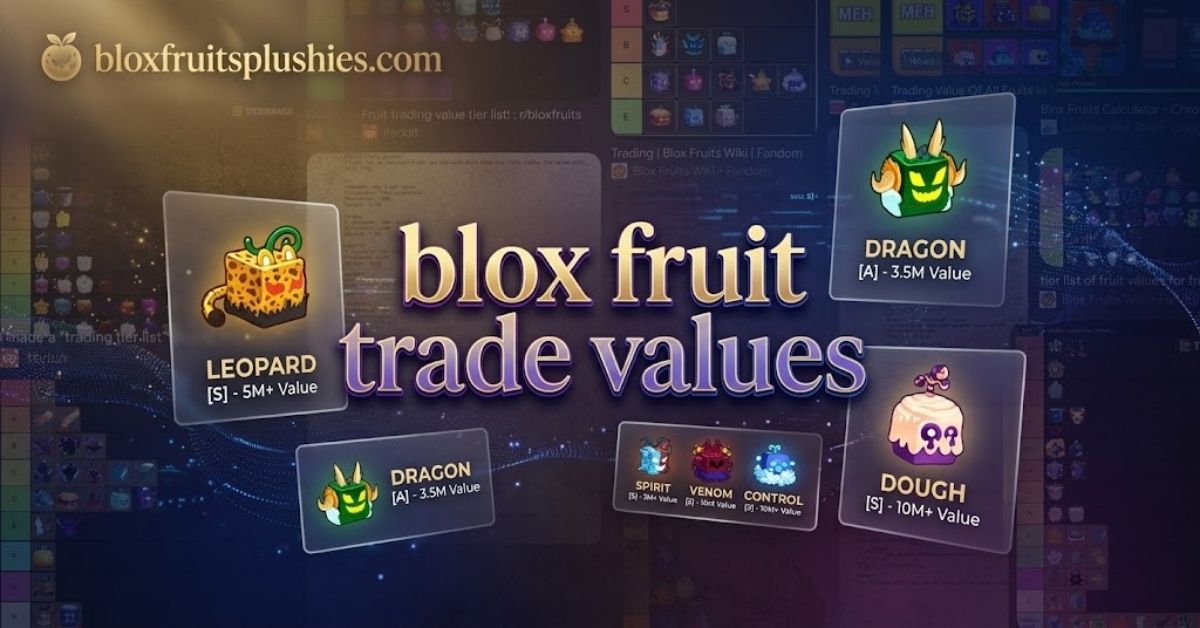
Blox Fruit Trade Values: How to Know What Your Fruits Are Actually Worth
The first big trade I ever made in Blox Fruits still bothers me a little. I traded a fruit I’d farmed for hours, thinking it was a fair swap, only to find out an hour later from a friend that I’d been underpaid by a wide margin. Nobody scammed me exactly. I just genuinely had no idea what my fruit was worth, and the other player clearly did.
That single trade taught me more about blox fruit trade values than any guide had up to that point, so this article is the breakdown I wish I’d read before making that trade.
The Problem: There’s No Official Price List in Blox Fruits
Here’s the thing that trips up almost every new player. Blox Fruits doesn’t have a built in, developer confirmed price guide for trading. The Beli cost you see in the in game shop tells you what a fruit costs to buy, but it has almost nothing to do with what that same fruit is worth when trading with another player. That gap creates a few recurring problems:
- New players assume shop price equals trade value, and it usually doesn’t
- Values shift constantly based on community demand, not just rarity
- Every update or balance patch can quietly reshuffle what’s considered valuable
- Without a reference point, it’s easy to accept a lopsided trade without realizing it
Because the entire trading economy is community driven rather than officially set, going into a trade without checking current values is basically negotiating blind.
My Experience Learning How Trade Values Actually Work
After that one bad trade, I started paying closer attention before accepting anything. At first I just asked in trading Discord servers whether a deal sounded fair, which helped a little but felt inconsistent since different people gave me different answers. Eventually I got into the habit of cross referencing more than one community value source before agreeing to anything, rather than trusting a single number.
What changed things most was realizing that a fruit’s value isn’t just about how rare it is. I once assumed a technically rarer fruit I owned was automatically worth more in a trade, and got turned down flat by the person I was negotiating with. It turned out the fruit I had, despite its rarity, had weaker combat performance and lower demand than the one I was trying to get, so nobody wanted it as badly. That was the moment trade values actually started making sense to me as a system, not just a number next to a fruit’s name.
How Blox Fruit Trade Values Actually Work (Solution + Tips)
1. Physical Value vs Permanent Value
This is the single most important distinction in the entire trading system. A Physical fruit is the consumable version you get from the Dealer, a spawn, a raid drop, or a trade. It disappears the moment you eat a different fruit or lose it. A Permanent fruit, bought with Robux, stays on your account forever and can be re-equipped anytime.
Because permanent fruits never disappear, they’re typically worth significantly more than their physical counterpart, often several times the value.
Tip: Always confirm which version is being offered before agreeing to a trade. Mixing up physical and permanent value is one of the most common ways new traders get shorted.
2. Rarity Sets a Baseline, But Doesn’t Decide Everything
Fruits are generally grouped into rarity tiers, from Common all the way up to Mythical, and higher rarity usually correlates with higher spawn scarcity and generally higher value. But rarity alone doesn’t guarantee a fruit is worth more in a trade.
Tip: Before assuming a rarer fruit automatically wins a trade, check how that fruit actually performs in current PvP and grinding metas. A lower rarity fruit with strong demand can sometimes hold more trading power than a rare one nobody wants right now.
3. Demand Matters as Much as Value
Community value lists typically show a demand rating alongside the base value, and this number matters more than most beginners realize. A fruit can have a high listed value but low demand, which makes it genuinely harder to trade away for something you actually want, since fewer people are looking for it.
Tip: When comparing two possible trades, don’t just look at which side has the bigger number. Check demand on both fruits too, since a slightly lower value fruit with high demand can be easier to flip into something better later.
4. Values Shift Constantly, Especially After Updates
Trade values are not fixed. They move based on real trades happening across the community, and they can shift meaningfully after a balance patch, a rework, or even just a shift in what’s currently considered strong in PvP. A fruit that spiked sharply in value can settle back down within weeks as the initial hype fades and supply catches up with demand.
Tip: Never rely on a value you saw weeks ago. Recheck current numbers close to when you’re actually about to make the trade, not just when you started considering it.
5. Cross Check More Than One Source
Since there’s no single official value list, different community trackers can show slightly different numbers for the same fruit, especially right after a major update when the market hasn’t settled yet.
Tip: Before finalizing a trade you’re unsure about, compare values across at least two different community sources rather than trusting just one. If they roughly agree, you can trade with confidence. If they’re wildly different, that’s usually a sign the market for that fruit hasn’t stabilized yet.
Real Example: How a Value Spike Played Out
One of the clearest examples of how fast trade values can move happened with one of the game’s top tier mythical fruits earlier in 2026. After a wave of hype, its value spiked past what most players considered its normal range. Traders who sold or traded it away right at that peak came out well ahead. But the spike didn’t hold. Within a relatively short window, the value settled back down to a level well below that peak, as demand normalized and more players got their hands on copies of it.
Players who held onto it expecting the spike to continue ended up trading it later at a noticeably lower value than they could have gotten just weeks earlier. The lesson here isn’t that you should panic sell every time a fruit’s value jumps. It’s that treating any single value snapshot as permanent is a mistake, since the market can shift significantly in a short amount of time.
FAQs
Q1. Where do blox fruit trade values actually come from?
They come entirely from the community, based on real trades, demand in trading hubs, and adjustments made after major game updates. There is no official, developer set price list inside the game itself.
Q2. Why is my fruit worth less than I expected?
This usually comes down to demand, not just rarity. A fruit can be objectively rare but still have lower trading value if its combat performance or popularity has dropped in the current meta.
Q3. What’s the difference between physical and permanent fruit value?
Physical fruits are consumable and disappear if you eat another fruit, while permanent fruits are purchased with Robux and stay on your account forever, which is why permanent versions are typically worth considerably more.
Q4. How often do blox fruit trade values change?
They can shift daily based on ongoing community trades, and they often shift more noticeably right after a game update, balance patch, or fruit rework.
Q5. How can I avoid getting underpaid in a trade?
Check current values across more than one community source right before trading, pay attention to demand scores rather than just base value, and avoid trading based on numbers you saw more than a week or two ago.
Conclusion
Blox fruit trade values aren’t complicated once you understand the system behind them, but they are easy to get wrong if you’re relying on outdated numbers or assuming rarity alone decides worth. Physical versus permanent status, current demand, and how recently the market has shifted all matter just as much as the base value itself.